
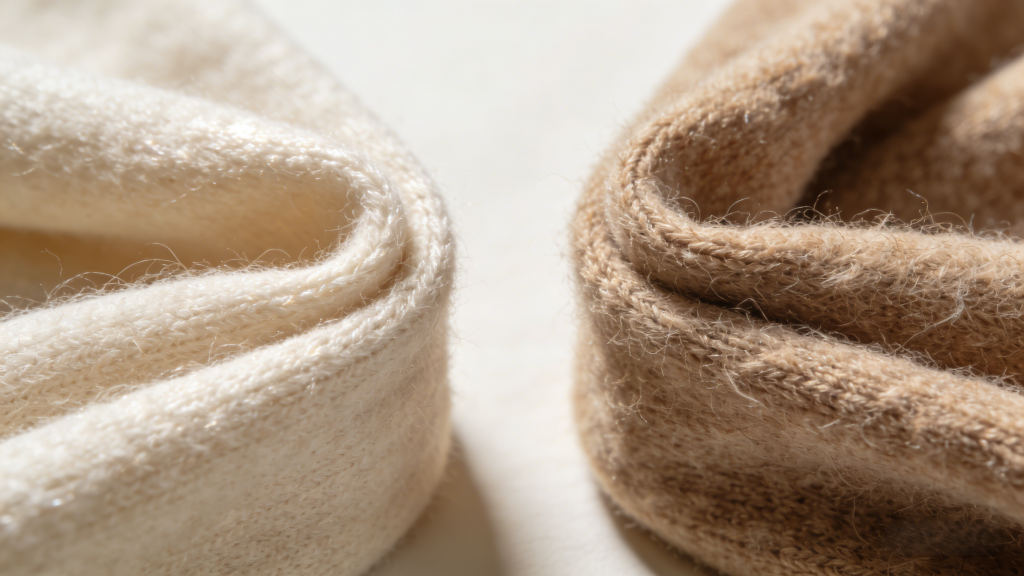
How to Tell if Your Cashmere Is High Quality
Buying cashmere is an investment — but not all cashmere is created equal. From fiber length to knitting density, several technical details determine whether your sweater will stay soft, resist pilling, and last for years. If you’ve ever wondered how to recognize truly premium cashmere (and avoid the cheap blends that won’t survive one winter), this guide breaks down every sign of high quality in a clear, practical way. If you’re new to cashmere, you may also enjoy our guide on how cashmere is made.
1. Check the Fiber Length: Longer Fibers = Better Quality
High-quality cashmere uses long, fine fibers that come from the soft undercoat of Hircus goats. These fibers naturally resist pilling and feel smoother against the skin. (To understand how cashmere compares to wool, cotton, or silk in terms of fiber quality, you can read our guide to luxury fabrics.)
How to tell:
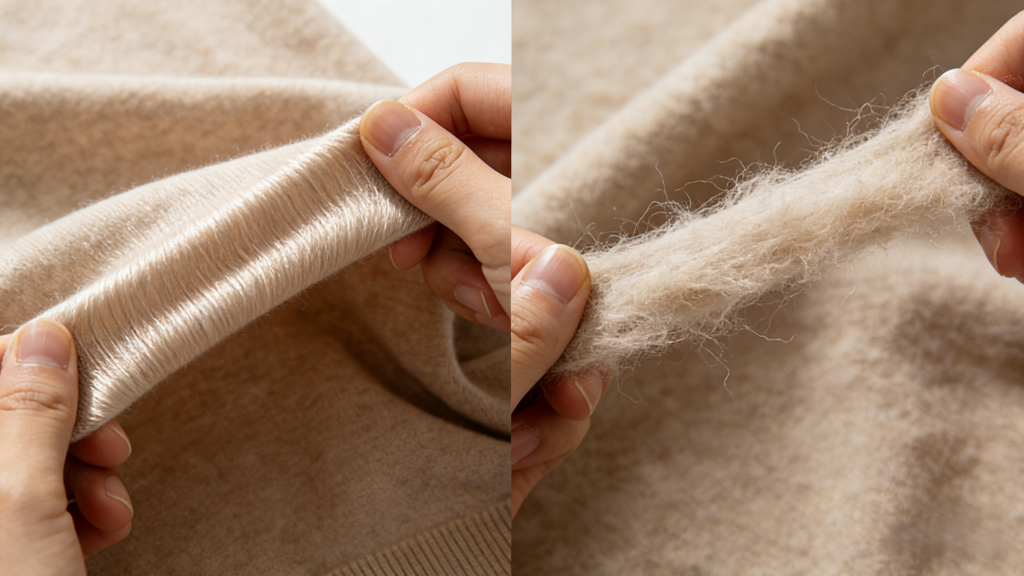
Gently stretch a small section of the fabric.
If the knit bounces back and feels smooth, the fibers are likely long.
If it looks fuzzy, overly fluffy, or sheds easily, it probably contains short fibers — a sign of lower quality.
Why it matters:
Short fibers break quickly, causing pilling and thinning after only a few wears. Long fibers stay intact, giving the sweater longevity.
2. Feel the Texture: Soft but Not Slippery
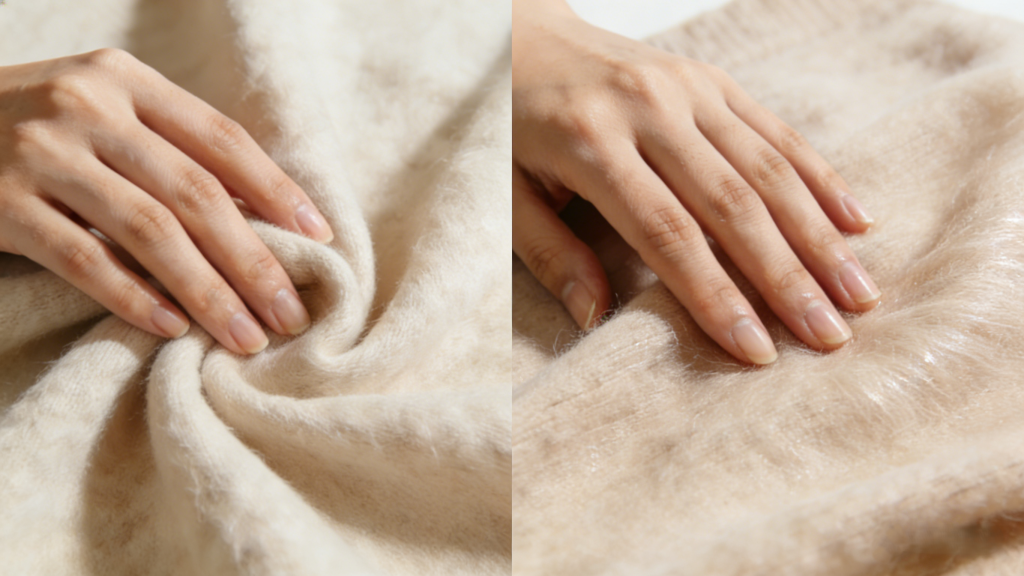
Cashmere should feel soft, warm, and slightly plush — but not slippery or overly silky.
A slippery texture can indicate:
Chemical softeners
Over-processing
Or blends with synthetic fibers
High-quality, minimally processed cashmere becomes naturally softer with wear, not the other way around.
The touch test:
Rub it gently between your fingers.
It should feel lightweight, warm, and matte — not shiny.
If it feels greasy or squeaky, it’s a red flag.
3. Look at the Stitch Density
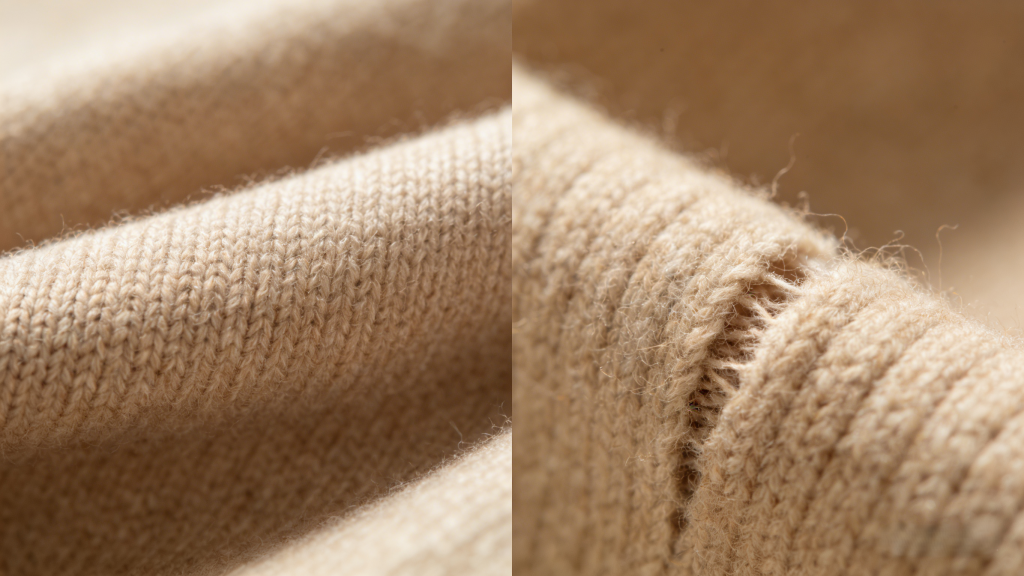
A dense, even knit is one of the easiest signs of premium craftsmanship.
Check for:
Tight, uniform stitches
Smooth, consistent texture
No gaps when you stretch the fabric slightly
Low-quality cashmere often feels thin or flimsy because it uses less yarn or loose knitting to cut costs.
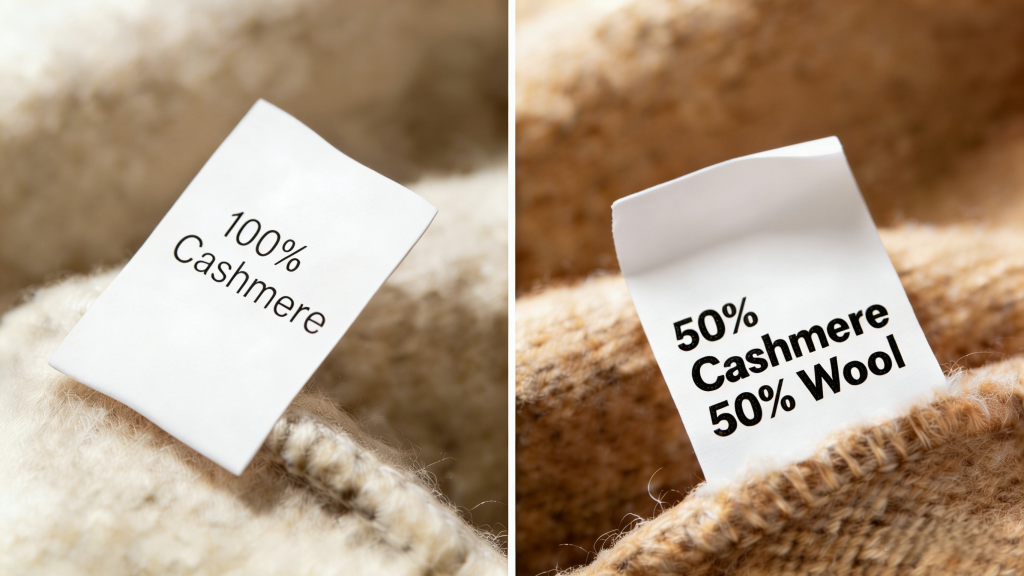
4. Check the Label for Purity (100% Cashmere Matters)
Always read the composition label.
High-quality:
100% cashmere
Or 100% Grade-A cashmere (best fiber quality)
Not ideal:
Cashmere blends with nylon, acrylic, or polyester
“Cashmere-feel” or “soft touch” labels
“Cashmere blend” that doesn’t specify percentages
These blends may be cheaper, but they won’t last or feel like true cashmere. If you want to see the benefits of wearing pure cashmere in everyday life, our guide to the advantages of cashmere clothing offers helpful insights.
5. Examine the Weight and Structure
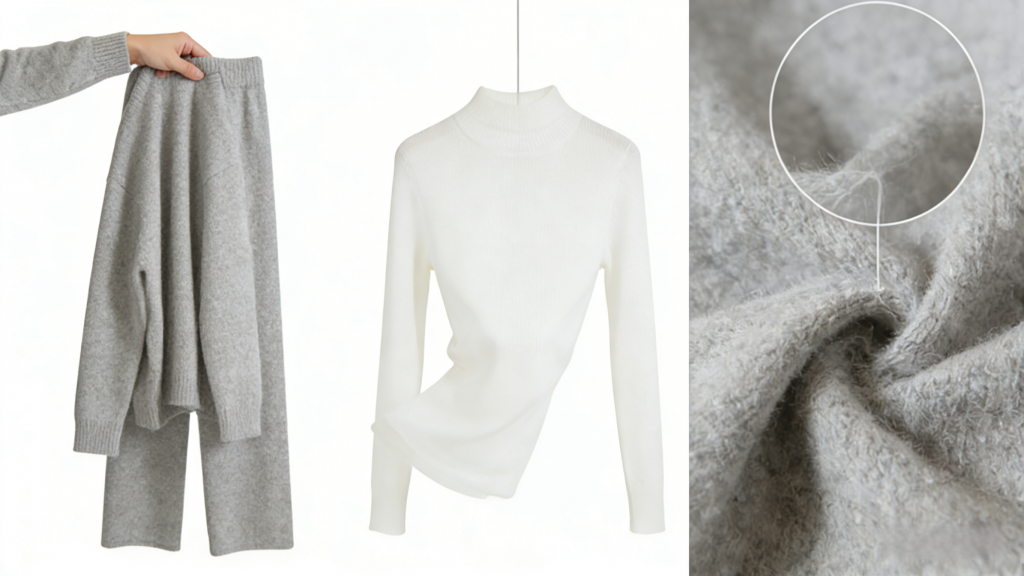
Quality cashmere should have a bit of weight — not heavy, but not paper-thin either.
Signs of good structure:
-
The sweater hangs cleanly
-
The knit holds its shape
-
The fabric does not feel flimsy or transparent
Ultra-thin “budget cashmere” often pills and wears out quickly. For styling inspiration using well-structured cashmere pieces, you can explore our winter outfit guide.
6. The Pilling Test (But Do It Carefully!)
All cashmere pills a little at first — this is normal.
But low-quality cashmere pills excessively from the beginning.
Quick test:
Rub the fabric lightly for 10 seconds
High-quality cashmere: minimal fuzz
Low-quality cashmere: visible balls forming immediately
This works because short fibers break faster than long ones.
7. Check the Country of Origin & Craftsmanship
Cashmere quality is influenced by where it’s sourced and produced.
Top-quality regions:
Inner Mongolia
Northern China
Nepal
Mongolia
Scotland (world-class manufacturing)
These regions are known for long fibers, humane collection methods, and refined knitting techniques.
8. Price as an Indicator — But Not Everything
High-quality cashmere requires slow production, careful sorting, and skilled knitting.
So yes — premium cashmere has a higher cost.
But expensive does not always mean good.
Instead, check the factors above: fiber length, density, feel, and stitching.
A well-made cashmere sweater is an investment that lasts 10+ years.
Conclusion
Learning how to recognize high-quality cashmere helps you build a wardrobe that feels luxurious, lasts longer, and is worth every dollar. By looking at the fiber length, stitch density, label purity, and craftsmanship, you can confidently choose sweaters that stay soft and beautiful season after season.